
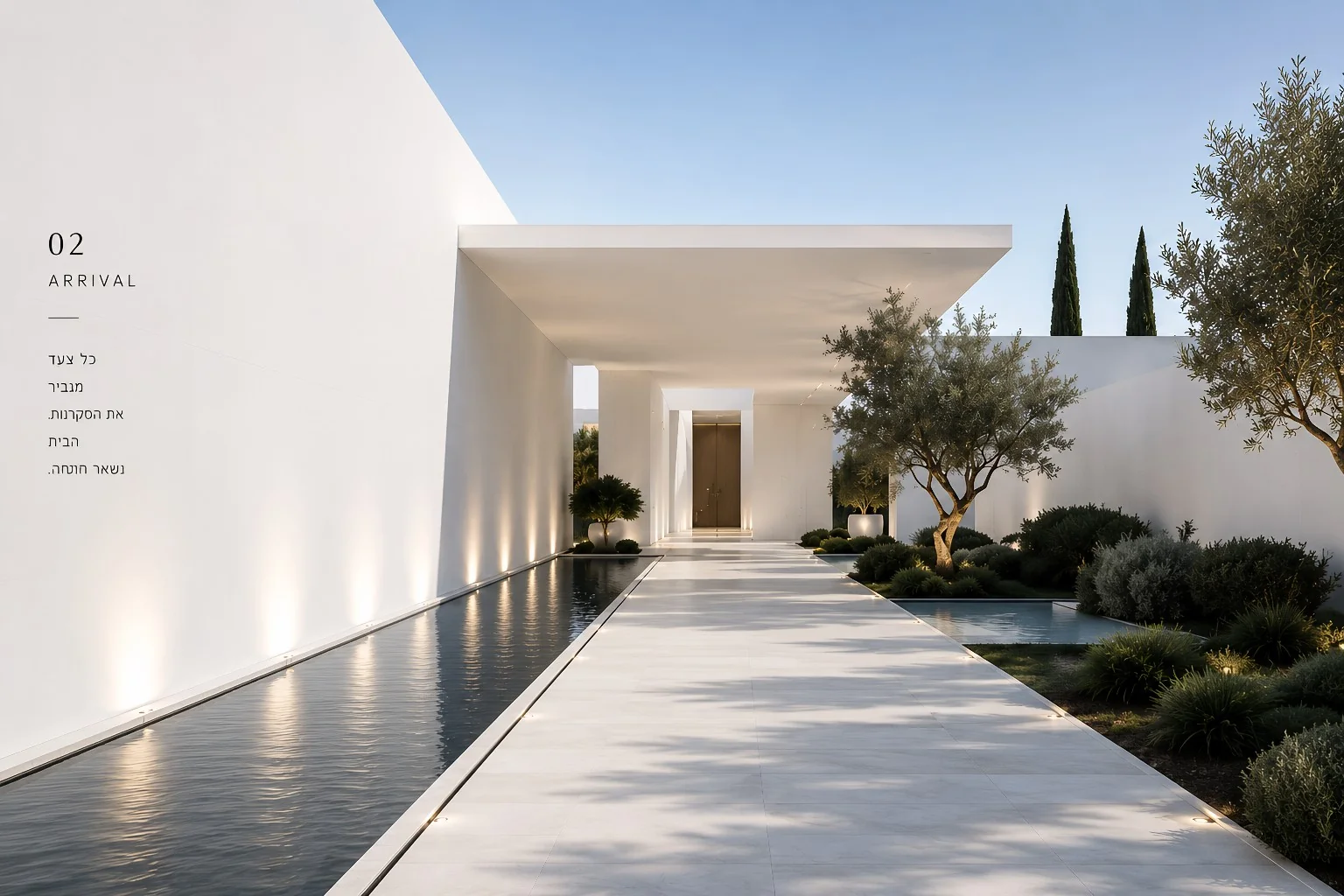
An overseas project can remain personal and precise. The key is a process with understandable stages, documented approvals and a communication rhythm that fits the distance.
Clarify your starting point
Do you already own land, a house or an apartment? Which documents are available? Is the project intended as a primary residence, a family home used seasonally or preparation for a future move? These answers determine the first questions to investigate.
Verify before drawing
What can be built depends on the property, its location and the framework applying to the specific project. Boundaries, levels, existing conditions and planning information should be examined through the relevant professional sources. Informal assumptions are not a substitute for project-specific verification.
Define what the home must achieve
Area alone does not describe quality. Priorities should address relationships between spaces, daylight, privacy, hosting family, connection to the garden and future change. They become the filter for later decisions.
Organize decision-making
From abroad, choices should be grouped and explained in context. A useful decision includes the alternatives, their implications, the response date and the work that depends on it.
Build with budget awareness
Budget belongs inside the design process. It helps distinguish between decisions that shape the home for decades and items that can evolve later. An appropriate allowance for uncertainty helps protect both ambition and control.
Prepare for the first meeting
Bring the available property information, location, an approximate timeline and images that communicate qualities you value. You do not need to arrive with a solution. The first objective is to frame the right questions.